Contact with primary care
About 4 in 5 people who died by suicide had contact with primary care during the year before their death.
 Suicide is a social issue988 support ↗
Suicide is a social issue, not just a mental health issue.
In 2024, 48,824 people died by suicide in the United States. That number represents people: parents, children, partners, friends, coworkers, neighbors, people who were part of families and communities just like ours.
Deaths tell only part of the story. In 2024, an estimated 14.3 million U.S. adults seriously thought about suicide, 4.6 million made a suicide plan, and 2.2 million attempted suicide during the previous year.
Many of us have probably known someone who was struggling, even if we never knew they were struggling. They are in our schools. They work beside us. They sit next to us at community events and places of worship.
In Canada, approximately 4,750 people died by suicide each year from 2020 through 2023. Worldwide, more than 720,000 people die by suicide each year.
Health and mental health systems play a role, but they are only one piece of the solution. Prevention cannot happen only in the mental health system. It also happens where people live, work, learn, connect, and support one another.
We all play a role in prevention, helping to identify distress and helping others. Remember, we can work together to make change.
Mental health professionals are an important part of suicide prevention. We cannot rely on one system alone. We all play a role in recognizing distress and helping others.
About 4 in 5 people who died by suicide had contact with primary care during the year before their death.
Thirty-one percent of people who died by suicide contacted mental health services within the prior year.
In a large U.S. study, 58.2% of people who died by suicide had no known mental illness documented in the available records.
The national suicide rate has not shown a sustained decline across these years.
Remember, we can work together to make change.
The brief decline in 2019–2020 did not last. The 2023 rate was not significantly different from the 2018 rate.
Source: National Center for Health Statistics, 2003–2023 ↗Suicide is a social issue. Contributing factors include substance use, relationship problems, financial problems, loss of housing, criminal or legal problems, crises, physical health concerns, isolation, and identity issues.
Most of these have not changed in 30 years. We've known for decades that these stressors are common precursors to suicide.
People aren't one-dimensional. A substance use problem may affect relationships, a job, health, and overall quality of life. It's rarely just one thing. It's often a combination of factors.
Relationship problems are not just about intimate relationships. They could involve parent-child relationships, siblings, or work dynamics. Who we are is often defined by who we're connected to. These connections are essential to our sense of self and well-being.
How people express distress is cultural. How people seek help is cultural. One size does not fit all. We need to consider cultural factors and tailor our strategies accordingly.
We cannot predict future suicides with any certainty. If something feels wrong, lean into it and ask directly, “Are you thinking about suicide?” Stay calm, listen without judgment, and do not back away.
 It’s often a combination of factors.
People may experience several stressors at the same time.
Staying connected with someone can make a meaningful difference.
Open each of the nine cards to review the factor and an action you can take.
0 of 11 reviewed. Review the factor cards and complete both activities to mark this page reviewed.
Suicide is a social issue. For young people, suicide risk is also about the environment they live in: school, peers, community, and family.
Developmental considerations for youth include social difficulties, impulsivity, limited coping skills, and developmental limitations.
The CDC’s 2023 Youth Risk Behavior Survey is a nationally representative survey of U.S. students in grades 9 through 12. During the 12 months before the survey, 20.4 percent of students reported that they had seriously considered attempting suicide. During that same period, 9.5 percent reported making at least one suicide attempt.
These statistics describe population-level experiences. They cannot identify which individual student may be considering or attempting suicide. Their purpose is to demonstrate why prevention, supportive relationships, early conversations, and access to help are important in every school.
Young people who are being bullied and young people who bully others both experience higher rates of suicidal behavior. Feeling connected and supported at school is associated with a lower likelihood of suicidal behavior, highlighting the value of supportive school environments.
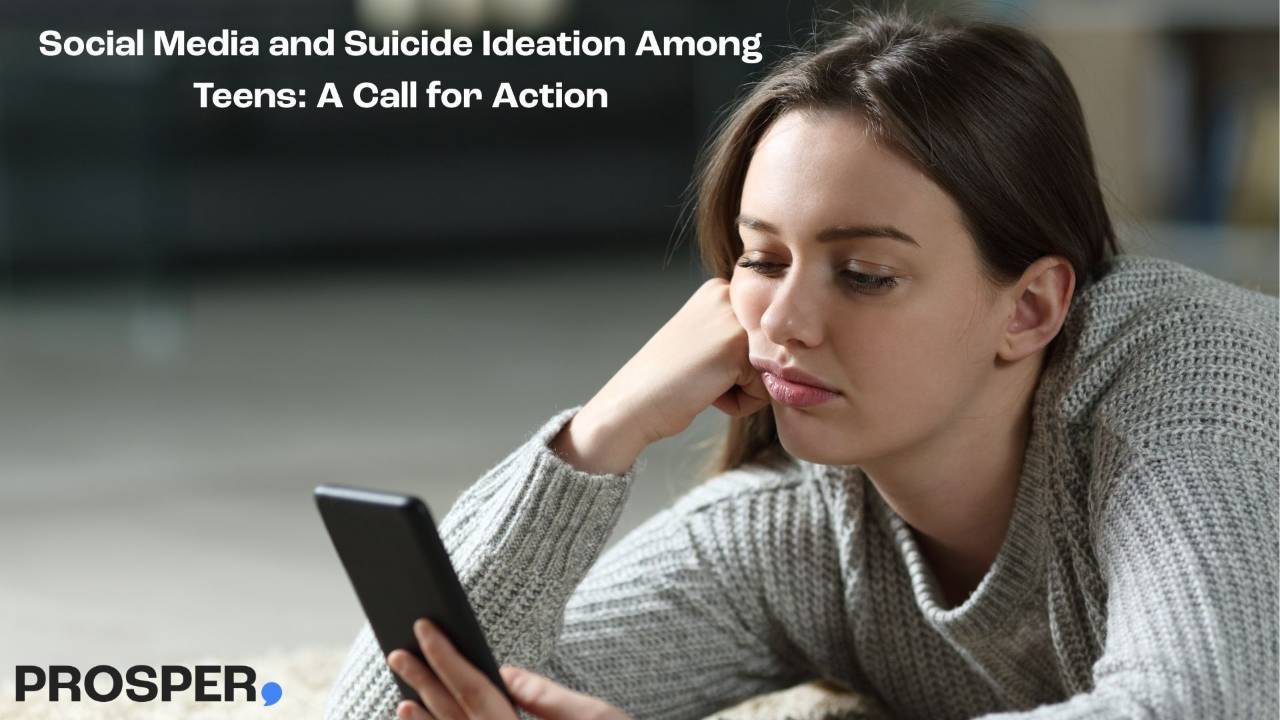
Social media can provide connection, information, and peer support. It can also expose adolescents to cyberbullying, negative social comparison, harmful content, and disrupted sleep. Frequent use is associated with several adverse mental-health indicators, but the evidence does not establish that social media alone causes depression, anxiety, or suicidal behavior.
Thwarted belongingness is what happens when someone desperately wants to be a part of something, but they’re being shut out or kept out. For teenagers, development includes questions about who they are, who their peers are, and how they are similar to or different from them.
Prevention includes preventing bullying and substance use, improving school climate, and promoting connection. Make sure every young person has at least one caring adult they can go to. Ask youth directly about suicide, emotional distress, safety, and who they can turn to for support.

Prevention, supportive relationships, early conversations, and access to help are important in every school.
U.S. high school students, grades 9–12 · 2023 · During the preceding 12 months
These statistics describe population-level experiences. They cannot identify which individual student may be considering or attempting suicide. Their purpose is to demonstrate why prevention, supportive relationships, early conversations, and access to help are important in every school.
Ask youth directly about suicide, emotional distress, safety, and who they can turn to for support.
Young people who are being bullied and young people who bully others both experience higher rates of suicidal behavior.
When working with youth involved in bullying, ask about suicide, emotional well-being, safety, and available supports.
 CDC · U.S. high school students, 2023Social media and youth experiences
Section 3 continues with population and cultural context. Conversation and intervention skills follow later in the course.

How prevention can grow from community values, relationships, and shared responsibility.
Read the article
Kent introduces prevention, intervention, and postvention rooted in community values.
Listen to the episode